

US Stands Firm Against CBDC Development | Opinion
.jpeg)
For years, lawmakers and policymakers in the United States have been researching, discussing, and reporting on whether to implement a central bank digital currency (CBDC), also known as a “digital dollar.” However, no concrete decisions have been made.
Why Cryptocurrency Technology Is Preferred Over CBDC
CBDCs are digital versions of traditional fiat currencies, issued by governments to promote greater economic inclusion and financial inclusion. They also have the potential to improve payment efficiency through cryptography. CBDCs increase monetary policy control in the global payment system, while reducing the use of cash and the risk of financial instability associated with unregulated private electronic payment instruments, such as stablecoins and meme/altcoins.
There are two types of CBDCs: retail CBDCs for the public and wholesale CBDCs for interbank payments. Despite the benefits, many in the United States are skeptical about issuing CBDCs due to privacy concerns and economic risks.
Trump Administration Policy on CBDCs
On January 16, US Treasury nominee Scott Bessent stated his strong opposition to issuing CBDCs before the Senate Finance Committee. He argued that there was no reason for the United States to implement CBDCs due to privacy concerns and economic viability.
Then, on January 23, President Donald Trump signed an executive order banning the creation and use of CBDCs in the United States. This decision has drawn mixed reactions from industry experts, including Rhett Shipp, CEO of Avant, who believes that stablecoins are a better option and do not harm the utility of the USD.
Global CBDC Development Status
According to the Atlantic Council’s tracker, 66 countries are exploring CBDCs, with China leading the way. Only three countries – Nigeria, Jamaica, and the Bahamas – have issued CBDCs. China, with its e-CNY pilot program, has seen mixed success, with transaction volumes reaching 7 trillion yuan by June 2024.
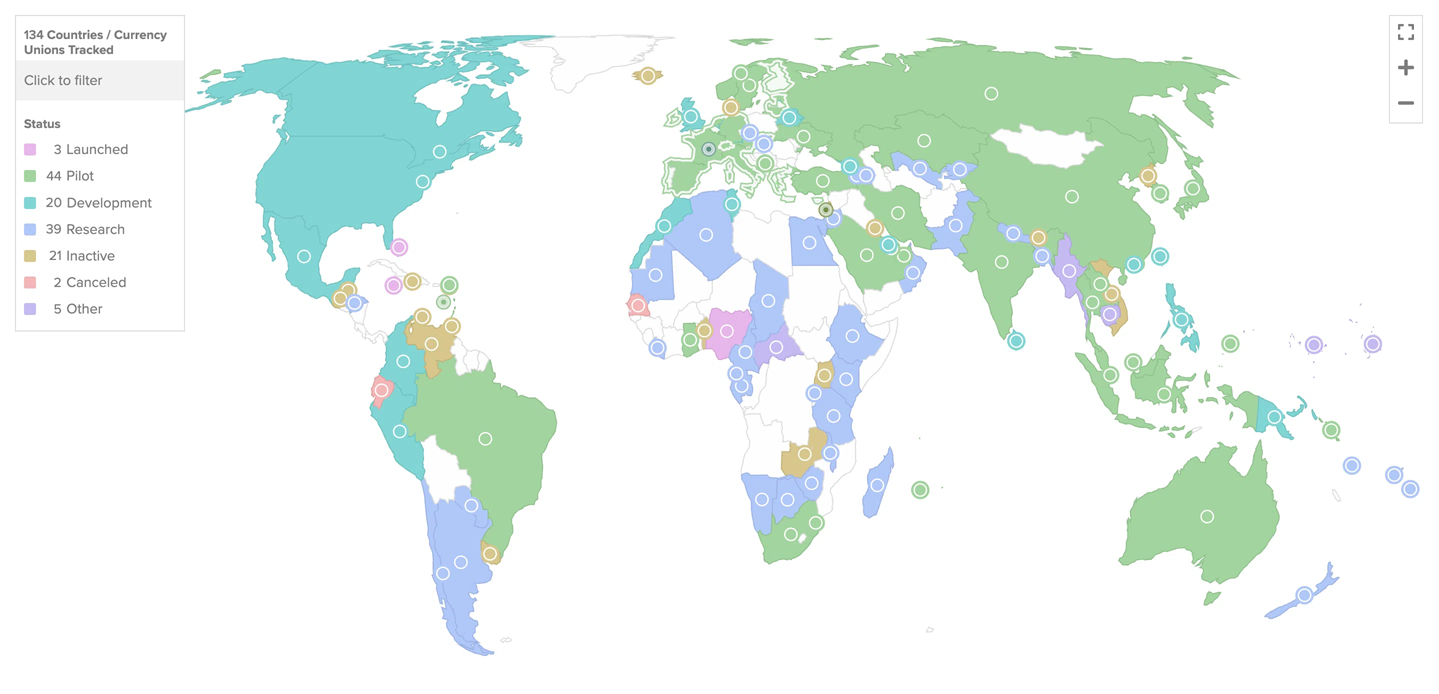
Central banks in countries such as China, India, Japan, and Singapore are also piloting CBDCs, while the United States remains firm in its stance against developing CBDCs.
Global Market Faces Security and Privacy Challenges
A report from the IMF highlights that the global CBDC ecosystem is facing many challenges related to cybersecurity and privacy protection. Central banks around the world are working to develop appropriate legislation to regulate the issuance and distribution of CBDCs.

Wholesale CBDC and EU Direction
While the US has rejected the development of CBDC, the European Union is expanding its wholesale CBDC payment system, focusing on transactions between financial institutions. The ECB plans to build a CBDC payment platform in two phases, first creating the infrastructure, then integrating with other financial systems.
Conclusion
The development of CBDC globally is inevitable, but the US is choosing its own path, focusing on stablecoins and other crypto solutions. Countries like China and the EU continue to lead the way in developing CBDC solutions, while experts say CBDC may not become a reality in the US anytime soon.