
Ethereum Sets Fusaka Launch Date – The Key to Layer 2 Data Scaling
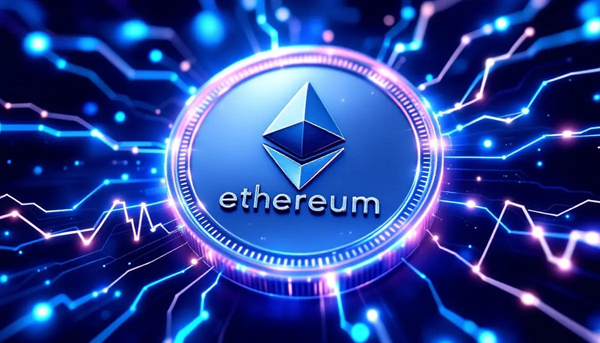
Ethereum has officially set a December 3, 2025, date for Fusaka, its next major network upgrade, marking a major milestone in its journey to scale the world’s leading blockchain.
Fusaka Highlights
Unlike previous updates like Pectra, which focused heavily on user experience, Fusaka is primarily focused on technical infrastructure. This upgrade includes 11 EIPs (Ethereum Improvement Proposals), emphasizing on improving data processing capabilities for Layer 2 solutions – which are the main drivers for reducing fees and increasing speed on Ethereum.
One of the key changes is an improvement to blobs – the data packets used by rollups. Fusaka will pave the way for further “blob parameter-only” adjustments, increasing the number from the current 6 blobs to 15, then 21 blobs per block. This means cheaper and larger data bandwidth, making Layer 2s like Optimism, Arbitrum, zkSync more efficient.
Roadmap for testing and deployment
October 2025: testing on Holesky, Sepolia, and Hoodi testnets.
December 2025: deployment on mainnet, if no major consensus bugs arise.
2026: BPO (blob parameter-only) upgrades are applied sequentially to increase data throughput.
Developers say the phased rollout gives the node operator community more time to adapt, minimizing the risk of mass upgrades.
Long-term implications
Fusaka can be seen as a necessary stepping stone before Ethereum moves towards future “user-oriented” updates. As data storage costs plummet, rollups will have a clear competitive advantage and promote the shift of users and applications to Layer 2.
This will not only help Ethereum maintain its central position in the Web3 ecosystem, but also open up the scenario of DeFi, NFTs and larger-scale on-chain applications.
👉 In short: Fusaka is not a flashy upgrade in terms of experience, but it is a “data pipeline” for the future of Ethereum. By increasing scalability, Ethereum continues to strengthen its infrastructure to maintain its dominance in the face of increasingly fierce competition from Solana, Avalanche or new-generation blockchains.