

Elon Musk's legal battle against OpenAI heats up as judge pushes trial to 2025
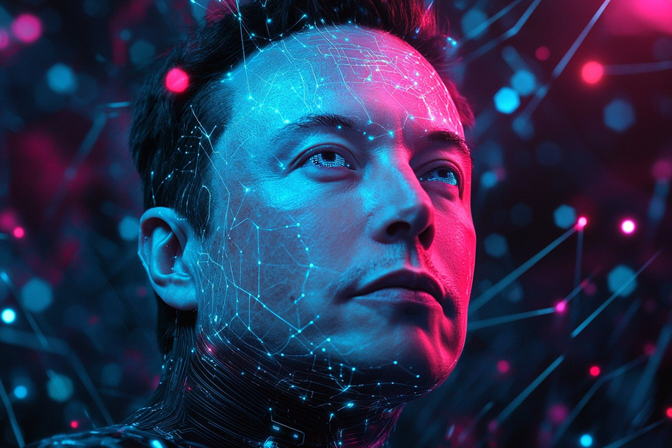
A US judge has denied Elon Musk's request to halt OpenAI's business transition, but has allowed the trial to be pushed to fall 2025. Musk's lawsuit against OpenAI continues, with many highlighting legal claims related to the company's original mission.
- Musk continues to push the case
- Legal tensions reflect larger issues in AI
- OpenAI bets on advanced AI agents
Musk continues to push the case
Elon Musk's legal battle with OpenAI has entered a new phase after his request to halt the company's transition to a for-profit entity was denied. While the ruling does not block OpenAI’s current operations, the case continues, with a trial set for fall 2025.
Musk’s lawsuit, filed in early 2025, alleges that OpenAI abandoned its goal of developing artificial intelligence for the public good in favor of profit for investors. OpenAI CEO Sam Altman has denied the allegations, arguing that the model shift was necessary to raise capital to fuel the company’s growth in an increasingly expensive AI industry.
Judge Yvonne Gonzalez Rogers said that the evidence Musk provided, which was largely from internal emails, was not strong enough to warrant an injunction. However, she agreed that the case raised important legal issues, and therefore moved to expedite the trial.
Additionally, while the lawsuit was ongoing, Altman rejected a $97.4 billion acquisition offer from Musk, and SoftBank is in the process of leading a major investment round in OpenAI that could value the company at $300 billion.
The legal tensions reflect larger issues in AI
Elon Musk’s lawsuit raises questions about the control of artificial intelligence development and whether companies that started as nonprofits can legally transition to a for-profit model. Musk argued that OpenAI violated its original mission by switching its operating model, even though he was one of OpenAI’s biggest donors.
Musk left OpenAI in 2018 after the company rejected a merger with Tesla. Since then, OpenAI has received billions of dollars from investors like Microsoft, fueling its dramatic shift to the private sector.
While Musk has been highly critical of OpenAI’s new structure, the company has pointed out that he has attempted to merge OpenAI’s for-profit arm with Tesla, and has accused Musk of being competitively motivated in his lawsuit.
OpenAI Bets on Advanced AI Agents
Despite the legal dispute, OpenAI continues to grow aggressively and bet big on AI agents. The company has been working to develop AI agents that can serve various industries at prices ranging from $2,000 to $20,000 per month.
The company also recently launched GPT-4.5, a new language model that is said to offer significant improvements in pattern recognition and emotional intelligence, with a significantly higher API price.
Musk’s lawsuit against OpenAI could drag on for some time to come, with implications for both the AI industry and corporate structures.