
El Salvador Continues to Defy the IMF - Buying More Bitcoin
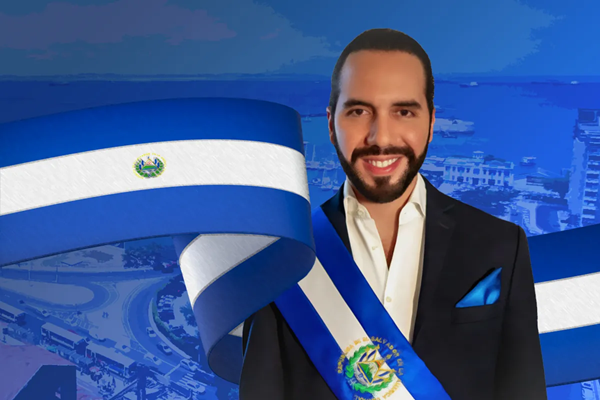
While the IMF urges a slowdown, El Salvador continues to stand its ground. President Bukele’s government has just added 5 more Bitcoins to its treasury, bringing its total holdings past 6,111 BTC - despite borrowing $1.4 billion from the IMF just a few months ago. What’s driving their bold stance?
Table of Contents
1. El Salvador Defies the IMF
2. A Relentless Accumulation
3. El Salvador’s Bitcoin Bet and Its Ripple Effects
4. Defying the IMF: A Risky Gamble?
El Salvador Defies the IMF
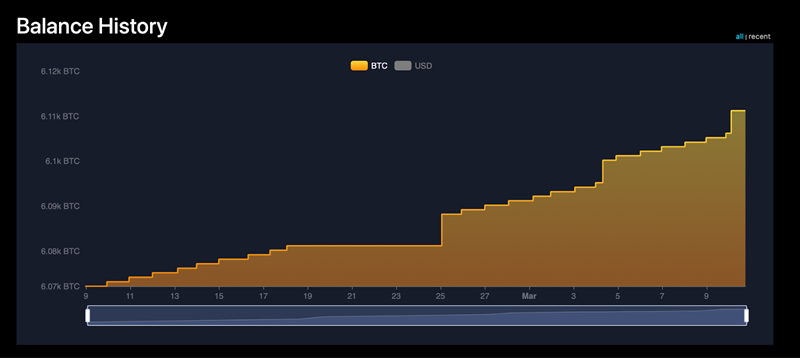
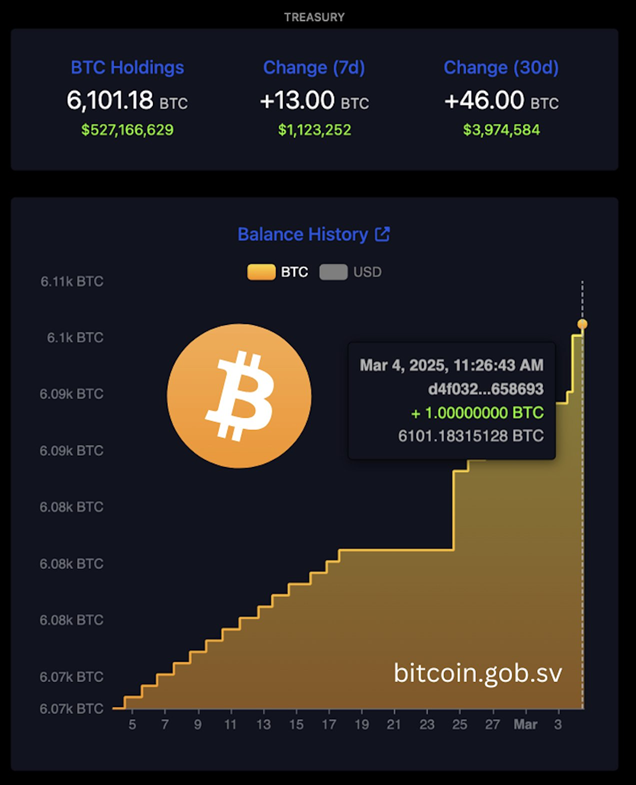
El Salvador is not backing down on Bitcoin, despite warnings from the International Monetary Fund (IMF). On March 10, the country added 5 more Bitcoins to its treasury, bringing its total holdings to 6,111.18 BTC, worth about $509.5 million at current market prices.
The move comes just months after El Salvador reached a $1.4 billion deal with the IMF in December 2024, part of a $3.5 billion financial package to stabilize the country’s economy. Under the deal, the government committed to conditions such as the use of Bitcoin in the private sector remaining voluntary, and taxes continuing to be paid in USD.
However, President Nayib Bukele’s administration has not backed down and has continued to increase its Bitcoin purchases. So why is El Salvador continuing to accumulate cryptocurrency despite the IMF’s caution? What does this mean for the world?
A relentless accumulation
Since the IMF deal on December 18, El Salvador’s Bitcoin holdings have increased from 5,967 BTC to over 6,111 BTC, with an additional 144 BTC purchases. The Bukele government has used a “Bitcoin DCA” (dollar cost averaging) strategy of buying 1 BTC per day, but it has also made purchases that exceed this normal level.
For example, just two days after the IMF agreement, El Salvador bought another 11 BTC on December 20, followed by 12 BTC on December 22, and several larger purchases in 2025.
Despite complying with the conditions on paper, the Bukele government has continued its Bitcoin-first policy in practice, even as the IMF reaffirmed its tightening conditions on March 3.
President Bukele has repeatedly stated that El Salvador has no intention of abandoning its Bitcoin strategy, and previous criticisms of the country’s potential failure have not materialized.
El Salvador’s Bitcoin Bet and Its Ripple Effects
Despite criticism, El Salvador’s embrace of Bitcoin has set a strong precedent for other countries. Cryptocurrency companies are now flocking to El Salvador, with Bitfinex Derivatives moving operations to the country after receiving a Digital Asset Service Provider (DASP) license.
Tether, the world’s largest stablecoin, has also decided to move its headquarters to El Salvador, with the company’s executives, including Paolo Ardoino and Claudia Lagorio, even purchasing citizenship and real estate there.
El Salvador is building an entire financial ecosystem around Bitcoin, with a digital asset securities law that allows the tokenization of assets ranging from debt to equities to real estate.
Defying the IMF: A Risky Gamble?
Defying the IMF has never been without consequences. Countries that have clashed with the organization have often faced serious economic problems, from currency devaluation to difficulties in obtaining loans. Argentina and Greece are prime examples.
The IMF has stressed that El Salvador should limit government involvement in Bitcoin-related activities. However, the Bukele administration continues to defy, despite the possibility of stricter borrowing conditions and higher financing costs in the future.
However, if El Salvador’s strategy is successful, the country could become a model for other countries struggling with inflation and weak financial systems. These countries may turn to Bitcoin as an alternative financial solution.
Despite the great risks, President Bukele remains steadfast in his plan, and El Salvador continues to attract attention, investment, and companies to the country.